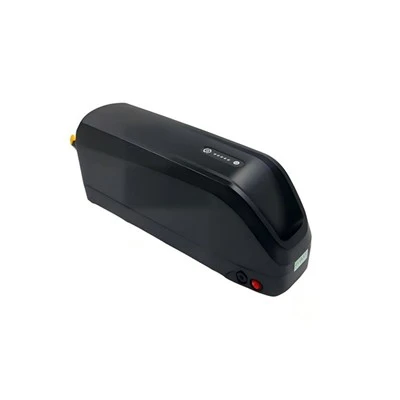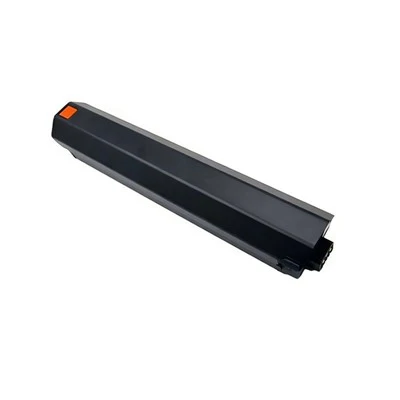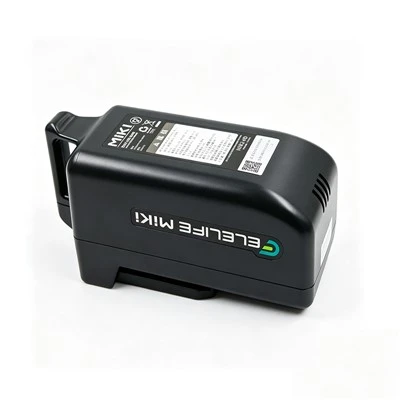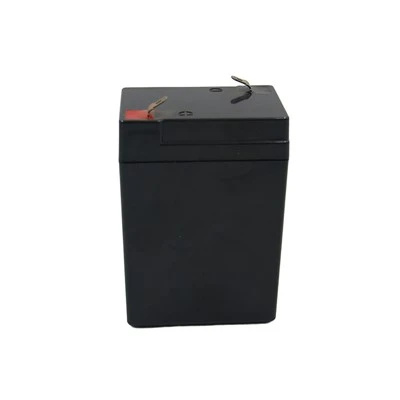
Less than eight months stand between China's battery industry and a regulatory cliff edge. On February 18, 2027, the European Union's Digital Battery Passport becomes mandatory under Regulation (EU) 2023/1542, requiring every electric vehicle, light means of transport, and industrial battery above 2 kWh placed on the EU market to carry a scannable digital record covering its full lifecycle. For Chinese manufacturers, who now send 42.1 percent of their battery exports to Europe - up from just 14.9 percent in 2020 - the rule is less a paperwork hurdle than a structural test of their entire supply chain.
The Battery Passport bundles four hard constraints into a unified gate: full-lifecycle carbon footprint management with binding limits, recycled material ratio mandates that rise year by year, digital information disclosure via QR-coded passports, and supply chain due diligence extending to upstream mineral extraction. A failure in any single dimension means the corresponding battery is barred from the EU single market.
"This regulation tests Chinese battery companies across the entire industrial lifecycle - no single link can be sidestepped," said Liu Kai, executive secretary of the New Energy Vehicle Battery Branch of the China Association of Automobile Manufacturers (CAAM). The four constraints land simultaneously and interact with the EU's Carbon Border Adjustment Mechanism, sharply raising the total cost of overseas compliance. Any battery exceeding EU carbon limits after 2027 loses market access outright.
For carbon footprint accounting, leading Chinese firms have begun full-lifecycle data mapping, but a structural bottleneck persists: China's industrial carbon emission factor databases lag behind, lacking unified collection standards, making mutual recognition with EU-aligned databases difficult. For passport disclosure, CATL and Sunwoda have joined the Global Battery Alliance (GBA) official pilot program. Liu Kai flagged a deeper tension: "How to achieve data desensitization while still meeting regulatory requirements and complying with data export controls - the balance among these three is a question the industry needs to clarify quickly under government guidance."
CATL built independent traceability files for its Shenxing and CTP battery products, completed segmented carbon accounting, and launched a cross-border data pilot with BMW aligned with Annex XIII of the EU regulation. Sunwoda developed its own integrated passport platform combining blockchain and industrial IoT across six modules covering 78 compliance indicators, both selected among the GBA's top ten benchmark pilots.
Beyond data systems, overseas manufacturing has become the primary lever. CATL has assembled a Germany-Hungary-Spain triangle (with a 100 GWh Hungarian megafactory and a 50 GWh Spanish LFP joint venture with Stellantis). Gotion High-Tech produces in Göttingen, Germany, with a 20 GHz Slovakian joint venture underway. AESC's Douai plant supplies Renault. EVE Energy, CALB, and Sunwoda are landing bases across Hungary and Portugal. Local production supports compliance on three fronts: direct supply chain due diligence on locally procured minerals, lower carbon footprints via green electricity, and stable recycled-material supply through local recycling partnerships.
Once the passport system is live, other major economies are expected to follow with similar digital traceability regimes. The China Association of Automobile Manufacturers and the China Battery Industry Association have signed a strategic cooperation agreement to align both industries. Whether the full industry - not just its leading edge - can cross the compliance threshold before February 2027 will reshape the competitive map of global battery trade for years to come.